


Although he continues to enjoy significant support among Latino voters, concerns over the cost of living, housing, public safety, and the pace of promised reforms are shaping the debate over his leadership.
By José Zabala, Content Creator
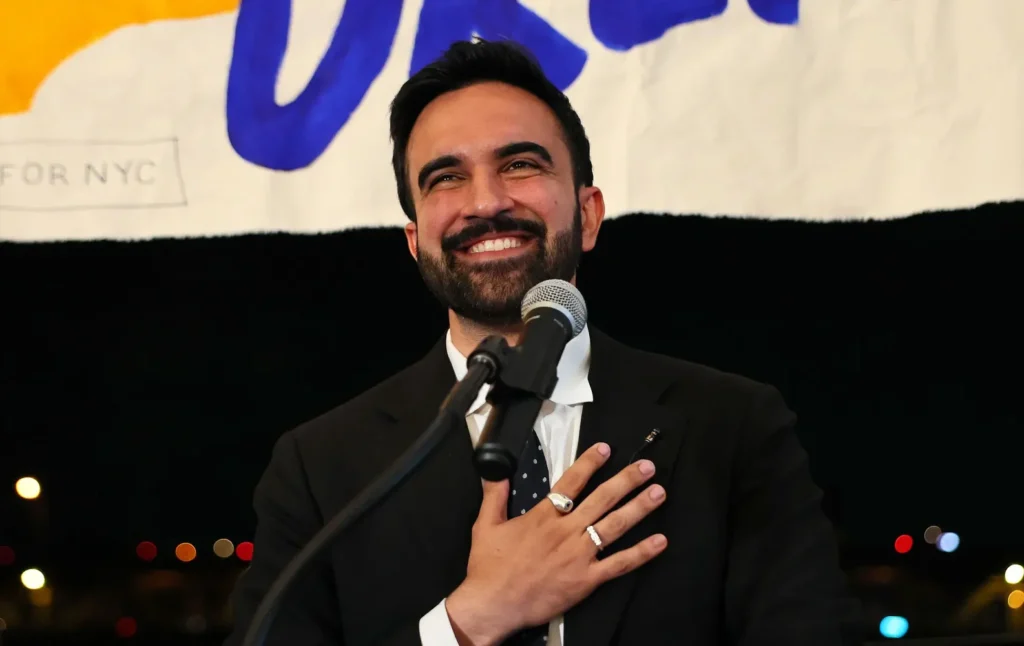
New York — On January 1, 2026, Zohran Mamdani officially took office as Mayor of New York City after a campaign that generated an extraordinary level of enthusiasm among young people, working families, immigrants, and historically underserved communities. His message of change, social justice, and support for the working class transformed him into a political figure capable of inspiring thousands of voters seeking a new direction for the city.
Now, six months into his administration, the political landscape has begun to change. The excitement of the campaign has gradually given way to a period in which residents are evaluating their mayor based on results rather than promises.
Across coffee shops, bodegas, subway stations, community centers, and small businesses throughout Washington Heights, the Bronx, Queens, Brooklyn, and Inwood, one question is increasingly being asked:
Has Zohran Mamdani lost the political appeal that carried him into City Hall, or is he simply facing the difficult reality of governing America’s largest and most complex city?
Strong Support Among Latino Voters—But Growing Expectations
Available public opinion surveys indicate that Mamdani continues to maintain a favorable image among a significant portion of New York City’s Latino electorate. Nearly half of Hispanic voters continue to view his performance positively, while another sizable segment prefers to reserve judgment until more time has passed.
However, the enthusiasm that characterized the beginning of his administration has become more measured.
Many Latinos acknowledge that the mayor remains engaged with local communities and continues to advocate for equity and social inclusion. At the same time, they believe the time has come to accelerate the implementation of the promises that inspired so many voters during the campaign.
Campaign Promises That Inspired Hope
Throughout his campaign, Mamdani pledged to confront many of the challenges affecting everyday New Yorkers.
Among his key commitments were:
- Expanding access to affordable housing.
- Reducing the burden of New York City’s high cost of living.
- Supporting small businesses.
- Improving public transportation.
- Strengthening social programs.
- Building a city government more connected to local communities.
- Promoting policies that benefit immigrants and working families.
These proposals generated considerable optimism, particularly within the Latino community, one of the city’s most influential economic and electoral forces.
Why Do Some Believe He Has Lost Part of His Political Momentum?
Political analysts generally agree that Mayor Mamdani has not lost public support altogether. Rather, what has changed is the level of expectation.
During the campaign, voters embraced a message of hope.
Today, they expect measurable results.
Among the issues that concern many Latino residents are:
- Rising rental costs.
- The continued shortage of affordable housing.
- Concerns about public safety in some neighborhoods.
- Higher prices for groceries and everyday necessities.
- Financial pressures on small businesses.
- Ongoing uncertainty affecting immigrant families due to federal immigration policies.
For many New Yorkers, these challenges continue to shape daily life, and they are looking for more visible progress from City Hall.
What Even His Critics Acknowledge
Even many of those who question the pace of his administration recognize several positive aspects of Mamdani’s leadership.
He has maintained a consistent presence in neighborhoods across the city.
He has demonstrated a willingness to meet with community leaders and listen to residents.
He has elevated public discussion on affordable housing, transportation, and social programs.
And he has cultivated an approachable governing style that differs from previous administrations.
Still, governing a city of more than eight million people requires far more than good intentions.
Residents want tangible results.
What Three Latino Residents Say
«I voted for him because I believed in his message. I still believe he can do a good job, but we need to start seeing real progress on housing and the cost of living.»
«Small businesses continue to face enormous challenges. The mayor has good ideas, but we need policies that help reduce costs and allow local businesses to survive and grow.»
«Six months is not enough time to transform a city like New York. I think he deserves time, but I also understand why people want to see concrete results because the economic situation remains difficult.»
The Real Test Is Just Beginning
Municipal government experts believe that the first six months of any administration are typically devoted to organizing government operations and launching major initiatives. However, they also emphasize that the second half of the first year will be critical in shaping public opinion about the mayor’s leadership.
If Mamdani delivers measurable progress on housing, public safety, transportation, support for small businesses, and overall quality of life, he could regain much of the enthusiasm that fueled his campaign.
If those changes fail to materialize at the pace voters expect, political pressure is likely to intensify and public support could continue to soften.
A Latino Community Waiting for Results
The Latino community will remain one of the most influential groups in determining Zohran Mamdani’s political future. Latinos represent not only millions of New York City residents but also one of the city’s most decisive voting blocs.
For now, the mayor continues to enjoy meaningful support and retains the confidence of many voters.
Yet the message increasingly heard throughout Latino neighborhoods is clear:
Campaign promises alone are no longer enough.
The coming months will determine whether the vision of change that brought Zohran Mamdani to City Hall can be translated into meaningful improvements for working families.
Political history consistently shows that while enthusiasm can win elections, results are what sustain leadership. That will be Mayor Zohran Mamdani’s greatest challenge moving forward.
Analysts: The “Democratic Socialist” Label Remains a Political Challenge
Political observers in New York City argue that one of Mayor Mamdani’s greatest challenges extends beyond governing itself and into public perception of his political identity.
Throughout his political career, Mamdani has been associated with the Democratic Socialists of America (DSA), a progressive political movement that plays an active role in American politics but remains controversial among some voters.
Although he was elected as the Democratic Party’s nominee, his ideological affiliation continues to generate debate.
Several analysts believe that this political identity may influence how some Latino voters perceive his administration, particularly among communities with roots in countries such as the Dominican Republic, Cuba, and Venezuela, where historical experiences often make voters more cautious toward political movements associated with socialism.
At the same time, experts emphasize that there is no conclusive evidence that this ideological label is the primary reason for any changes in his level of support among Latino voters.
They argue that concerns over housing affordability, inflation, public safety, the struggles of small businesses, and the pace of campaign promises being fulfilled are equally—if not more—important factors shaping public opinion.
According to political analysts, Mamdani’s greatest challenge is not convincing New Yorkers of his ideology, but demonstrating that his governing approach can deliver measurable improvements for working families.
If his administration produces visible progress in housing, public safety, transportation, employment, and support for neighborhood businesses, the debate over his political label is likely to become less significant than the practical results of his leadership.
As many experts conclude, political labels may influence first impressions, but ultimately it is performance that determines public trust and lasting political support.