


By José Zabala, content creator
Promoting art, culture, and Latino pride in the diaspora.
New York. – Community leader and insurance advisor Jaime Vargas offers a critical and responsible analysis of the inaugural address delivered by New York City’s new mayor, Zohran Mamdani, raising a concern that has echoed through neighborhoods and conversations across the diaspora: the explicit absence of the word “Latino” and any direct mention of Dominicans, despite their demographic, economic, and cultural significance in New York. In a speech centered on inclusion, social justice, and a “new era,” the only cultural reference that stood out was the word “sancocho,” perceived by many as a broad metaphor for diversity rather than a direct acknowledgment of specific communities.
Mamdani’s swearing-in marked a historic moment. At just 34 years old, the progressive leader promised to govern with “breadth and boldness” for more than eight million New Yorkers, with an agenda focused on affordable housing, public transportation, childcare, and social justice. Yet for a significant segment of the city, the speech left an uncomfortable question: why was there not a single direct mention of Latinos or Dominicans, communities that represent a decisive force in New York’s civic life?
The Demographic Weight That Did Not Go Unnoticed
The concern is far from minor. Approximately 28.3% of New York City’s population identifies as Hispanic or Latino, and Dominicans number around 702,000 residents, roughly 7.9% of the city’s total population—in practical terms, one in every eight New Yorkers in key neighborhoods such as Washington Heights, Inwood, the Bronx, and parts of Queens. Within the broader Latino population, nearly one in four is of Dominican origin. Even so, the inaugural address did not include the words “Latino” or “Dominican,” nor did it explicitly reference historic communities like Washington Heights.
Who Is Jaime Vargas, and Why Does His Analysis Matter?
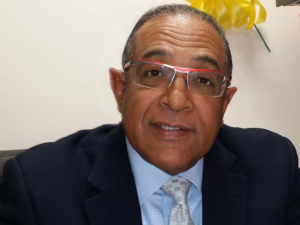
Jaime Vargas is a community leader, insurance consultant, and a respected voice on immigration, health access, financial protection, and the rights of working communities in New York. With decades of hands-on work with Latino families particularly Dominicans Vargas understands firsthand how political language shapes perceptions of inclusion, representation, and institutional trust. From this vantage point, he offers a political, legal, and strategic reading of the inaugural address.
Jaime Vargas’s Analysis: Language, Legality, and Strategy
For Vargas, the omission cannot be read merely as an oversight. In inaugural speeches, he explains, every word is weighed. “There is a conscious language decision here,” he says. From a legal and communications standpoint, mayors often choose universalist terms—all New Yorkers, the city belongs to those who live in it—to avoid interpretations of preferential treatment or segmentation by ethnicity or nationality.
“Within the U.S. legal and political framework especially in an inaugural address naming specific groups can spark unnecessary debates about favoritism or exclusion. Many leaders opt for broad language to legally shield themselves and project institutional neutrality,” Vargas notes.
However, he cautions that formal neutrality does not always equal real recognition. In a city where Latinos and Dominicans sustain entire sectors—construction, transportation, healthcare, commerce, and services—the absence of mention can feel like symbolic invisibility, even when the overarching message is inclusive.
Universalism or Cultural Distance?
Mamdani’s speech leaned on cross-cutting values: social justice, fighting inequality, housing, dignity, and immigrant rights. Politically, this can be seen as an attempt to forge a unifying narrative above specific identities. Still, Vargas underscores that politics is also about recognition.
“Dominicans aren’t asking for privileges. They’re asking to be seen. When a community represents nearly a third of the city’s Latino population, naming it matters even once. Naming is recognition,” he argues.
Regarding the reference to “sancocho,” Vargas is unequivocal: it does not replace explicit recognition. “It’s a friendly cultural metaphor, but ambiguous. It speaks to diversity in the abstract, not to concrete commitments to specific communities.”
The Contrast With Neighborhood Realities
The omission weighs more heavily when contrasted with the real priorities of the Dominican community:
- Affordable housing to prevent displacement.
- Immigrant protections amid federal pressure on sanctuary cities.
- Public safety understood as order, lighting, traffic, and mental health response.
- Accessible, coordinated public health services.
- Dignified jobs in the face of a high cost of living.
- Strong public education as a pathway to social mobility.
In neighborhoods like Washington Heights, these demands are not ideological—they are everyday realities.
Oversight or Political Calculation?
Vargas does not suggest deliberate exclusion, but he does point to political calculation. “Mamdani arrives with an ambitious agenda and under a national spotlight. His speech sought to avoid labels and focus on macro promises. The risk is that, along the way, key communities feel taken for granted.”
Legally, the omission violates no principle. Politically and at the community level, it creates unfinished business: translating universal language into visible actions for Latinos and Dominicans.
What Comes Next: Actions, Not Words
Vargas’s conclusion is straightforward: the speech is over; policies now speak.
“If within the first hundred days we see real progress on housing, immigrant protections, schools, and services in Dominican neighborhoods, the omission will be a footnote. If not, it will be read as a signal.”
For the Dominican diaspora, the question is not whether Mamdani is progressive or conservative, but whether he will be effective. In New York, legitimacy is earned by governing.
By José Zabala, content creator
Promoting art, culture, and Latino pride in the diaspora.